About Osteopathy and Reiki
Osteopathy
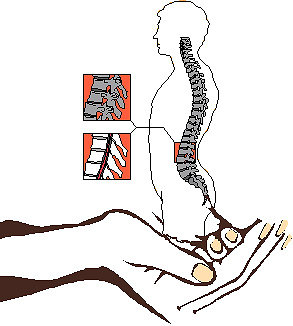
“Osteopathy is a way of detecting and treating damaged parts of the body such as muscles, ligaments, nerves and joints.
When the body is balanced and efficient, just like a well tuned engine, it will function with the minimum of wear and tear, leaving more energy for living.”
Description by General Osteopathic Council.
Osteopathy is a complementary therapy, an alternative to physiotherapy or chiropractic treatment. All osteopaths in the UK are regulated by the General Osteopathic Council (GOsC).
The Osteopathic approach is to look at the body as a whole, rather than just the area of pain. It uses techniques to enhance the blood and nerve supply to tissues, and to help your body’s own healing mechanisms. This is achieved through massage, joint mobilisation and manipulation techniques.
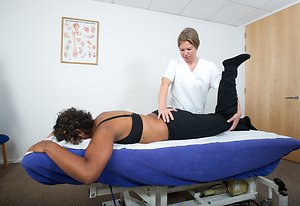
Photo courtesy of Kampfner Photography/The General Osteopathic Council
Nobody has the perfect alignment as your body adapts over time to daily life, or you may have a predisposition leading to an imperfection. It is important to find alignment so that your body functions effectively. An osteopath will do this by looking at your body as a whole, so you may be asked to undress down to underwear (or a vest and shorts) so that your body structure can be looked at. When people have pain it is often down to a weakness or misalignment somewhere. My job is to find and treat the problem!
Osteopaths have to complete CPD (Continuing Professional Development) courses every year to maintain standards of practise, so you can have confidence in Osteopathy. #OsteopathyWorks.
General information about Osteopathy from the GOsC
What to expect from an Osteopath
GOsC standards of Osteopathy
Why Reiki?
Having been an osteopath since 2011, I have treated many patients in that time. I decided to learn Reiki because I realised that so many people have emotional connections to their pain. Either deep rooted, chronic, or acute emotions that affect their bodies.
On a personal note, I started having Reiki after the passing of my best friend. It helped me through the early stages of the grieving process, helping me to think clearer, and therefore able to carry on with normal life.
What is Reiki?
The word Reiki combines two Japanese terms: rei (universal) and ki (life energy).
It is energy based healing, involving working on the body chakras.
It was developed by Mikao Usui, a Japanese Buddhist. It is not a religious practise, and the practitioner is used as a vessel for universal life energy to heal the recipient.
What happens in a Reiki treatment?
A treatment lasts from up to 30 or 60 minutes. You will be fully dressed throughout the treatment, and kept cosy with blankets to ensure that you can fully relax. Throughout the treatment, I will place my hands either on you or over you, from your head to your toes. You will feel warmth from my hands, this is energy passing through. Some people experience visions of colour, you may have tingles, some have connections with spirit, and some people simply have a snooze! Reiki gives you the healing that you need at that time.
About Me
I've always been interested in the human body, manual therapies and in helping people, leading me to train as an Osteopath. I studied for 5 years part time and graduated from Oxford Brookes University, and am now registered with the General Osteopathic Council (GOsC) and the British Osteopathic Association (BOA).
Useful Information
What to expect from an Osteopath, information from the GOsC, please GOsC standards of Osteopathy
Learn how sitting straight is bad for bad backs General information about Osteopathy from the GOsC
We spend so much time at work, and these days people are so busy at work that they have very few breaks. This means that we are in one position for a prolonged period of time, positions that don't suit humans! What to expect from an Osteopath provides some basic rules to follow whilst at work.
For work posture @05.